Every Platform. One Partner.
Fuxion engineers the full spectrum of extrusion technology — and recommends the right platform for your product, not the one machine we happen to sell.
What is extrusion?
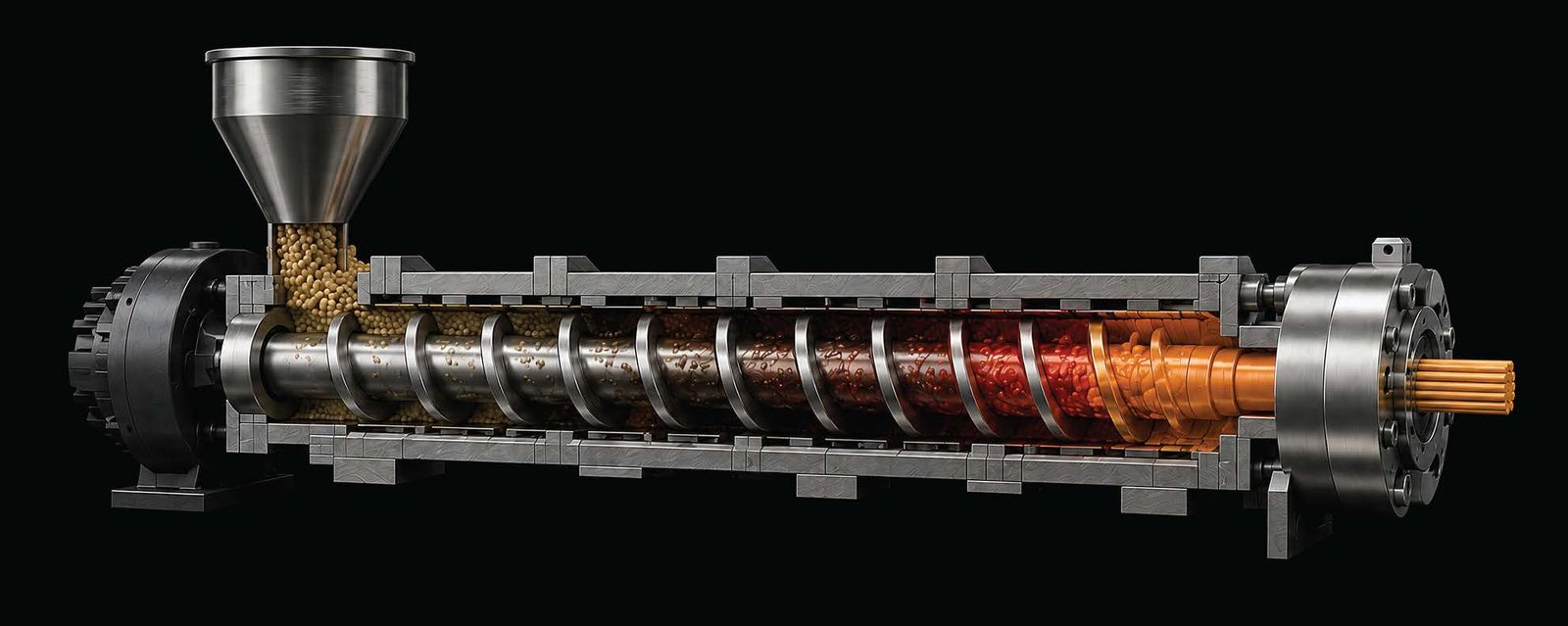
Extrusion is a continuous process in which raw material is fed into a barrel containing one or more rotating screws. These screws convey the material forward while applying mechanical energy, pressure, shear, heat, and residence time.
Depending on the product, extrusion can cook starches, denature proteins, melt polymers, disperse additives, align fibers, form textures, remove moisture, increase density, create porosity, sterilize ingredients, or initiate chemical reactions. A properly engineered extruder replaces multiple pieces of equipment — performing mixing, kneading, cooking, forming, reacting, venting, compression, thermal processing, and shaping in a single controlled process.
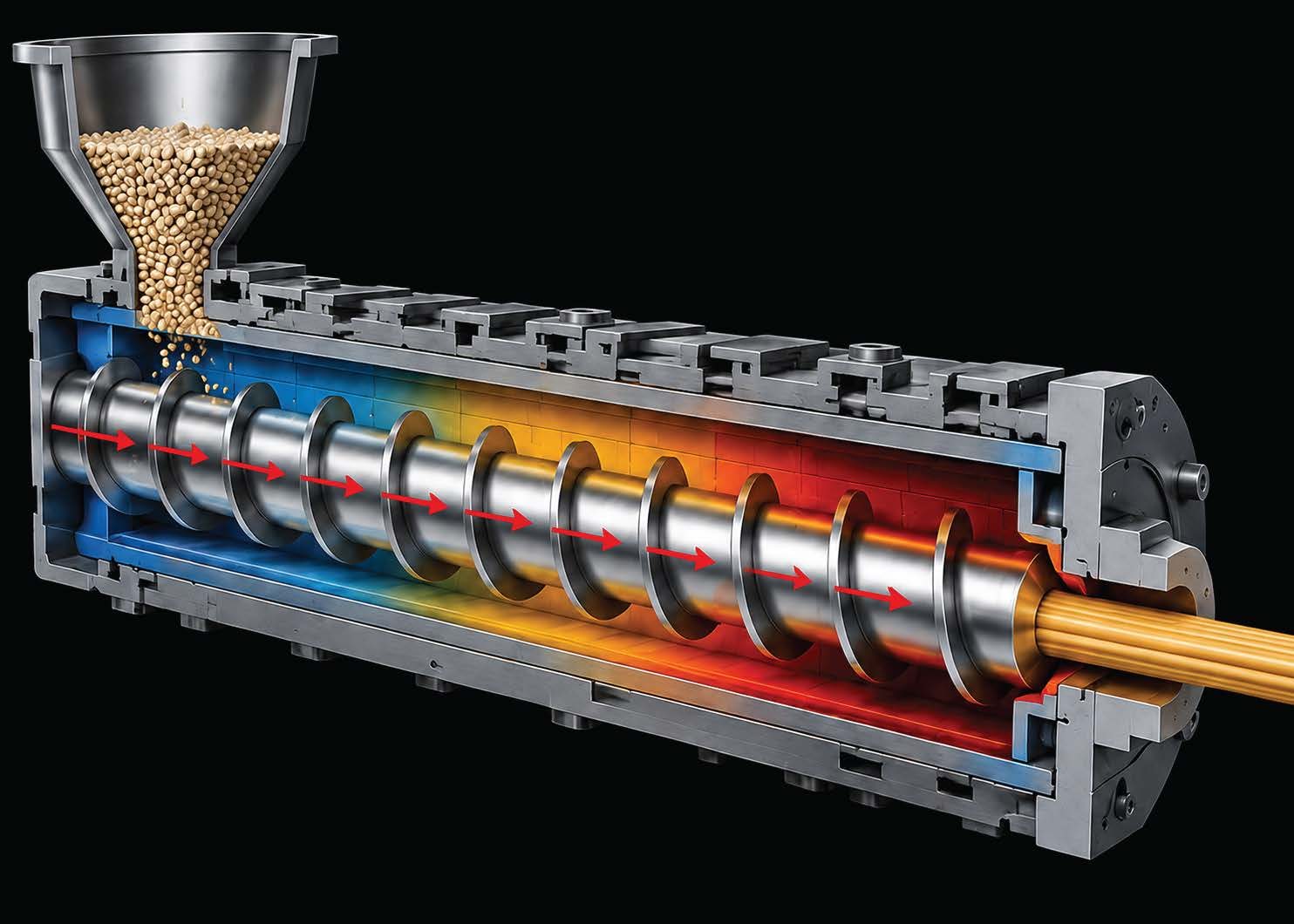
Material is conveyed from the hopper into the barrel.
Material is compacted. Pressure and shear increase.
Material is homogenized under pressure and prepared for the die.
Material is forced through the die to create the desired shape and structure.
The five key forces of extrusion
The way these forces interact determines the final product. Fuxion engineers each one — deliberately.
Mechanical Shear
Breaks down particles, distributes liquids, melts polymers, aligns proteins, and creates new textures.
Thermal Energy
Barrel heating, internal friction, steam injection — or a combination — to achieve precise temperature control.
Pressure
Builds as material moves forward, compressing and pushing it toward the die for shaping and expansion.
Moisture Control
Adds or removes moisture to control cooking, plasticization, texture, expansion, shelf life, and stability.
Residence Time
Time inside the extruder governs degree of cooking, reaction, melting, and final product quality.
Single screw vs twin screw
Single Screw Extrusion
Reliability, simplicity, efficiency, and cost-effectiveness. One rotating screw inside a heated or cooled barrel conveys and processes material continuously.
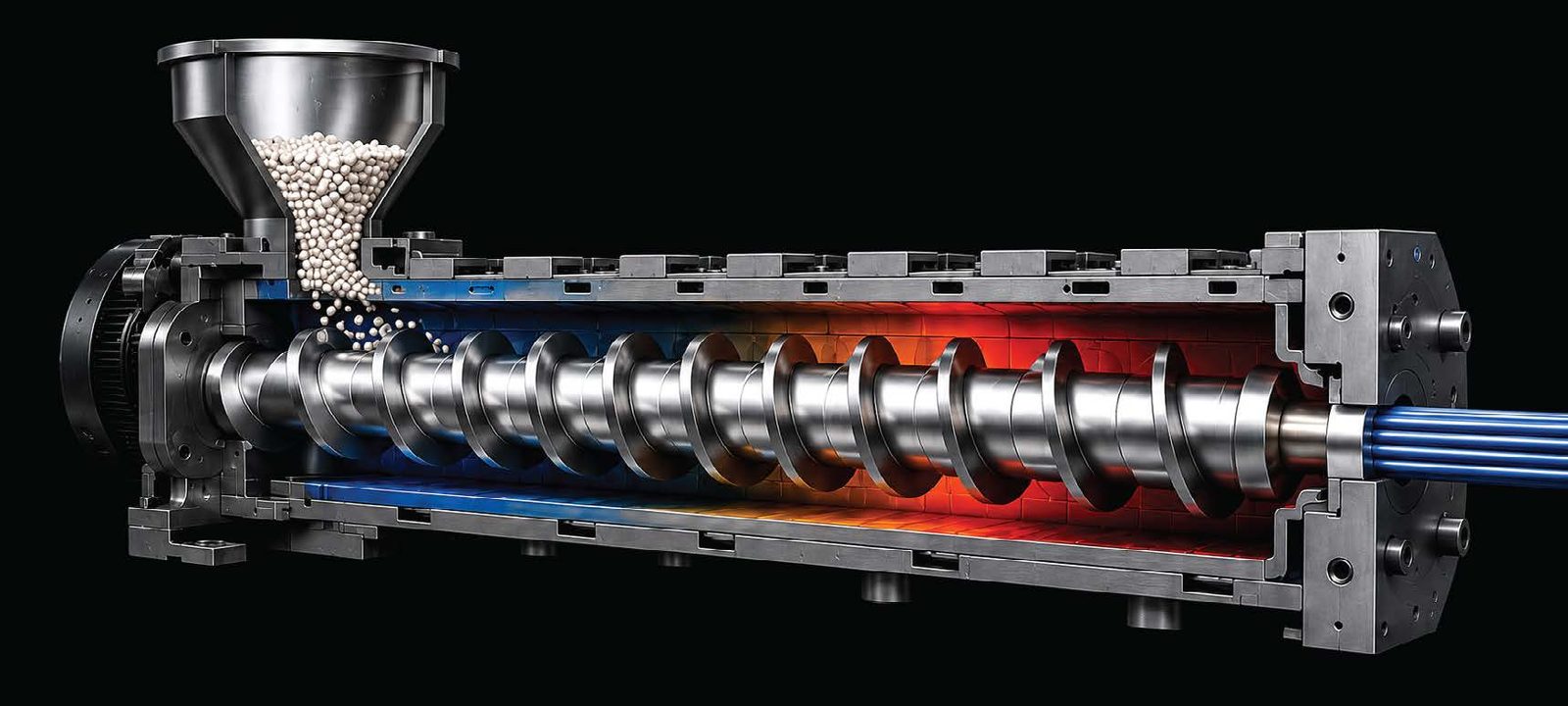
- Simple design & reliable operation
- Cost-effective, easy maintenance
- Wide application range
- Ideal for plastic profiles, simple foods, snacks, pasta, rubber & biomass densification
Twin Screw Extrusion
The most flexible and powerful extrusion technology available. Two intermeshing screws in a shared barrel — co- or counter-rotating by process requirement.
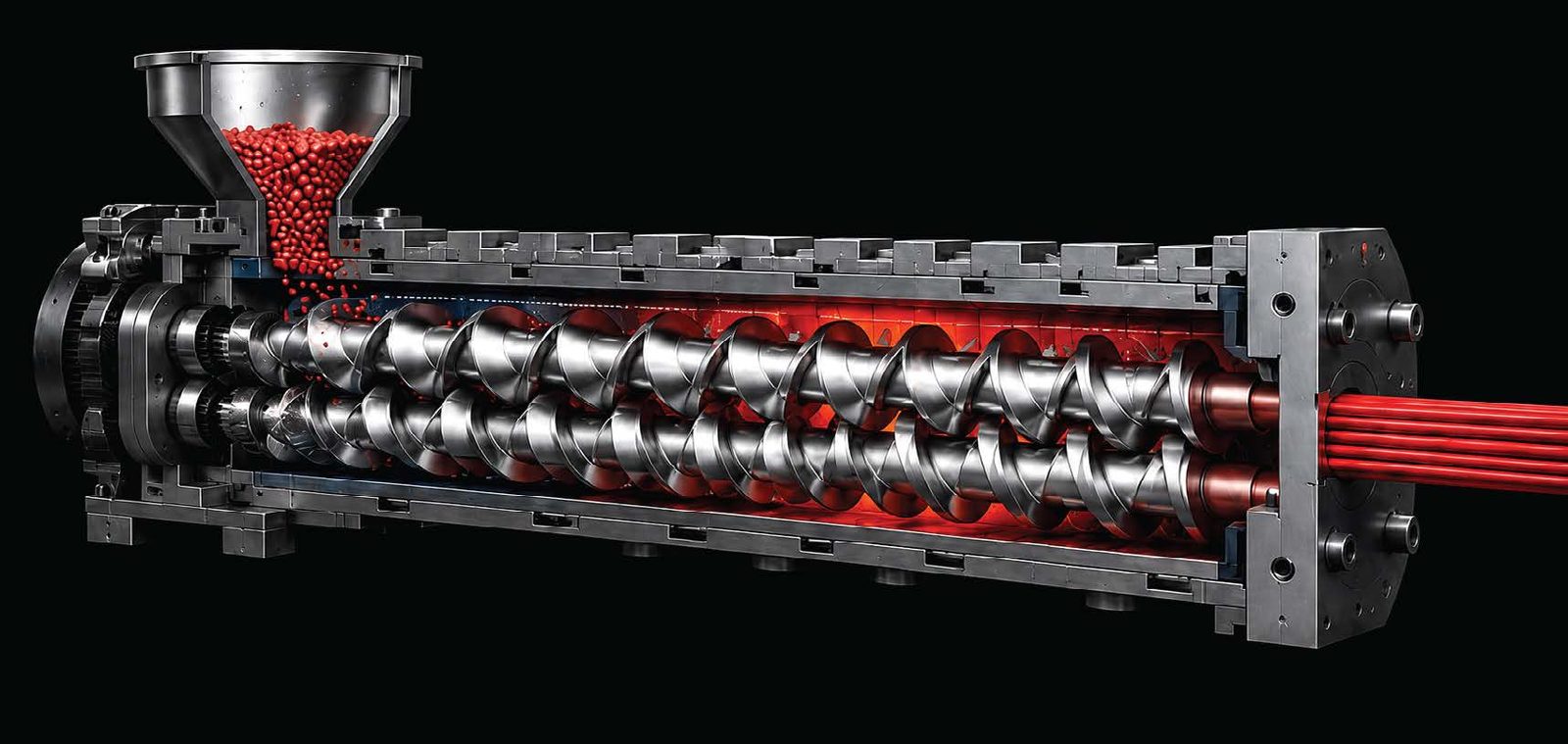
- Superior mixing & high flexibility
- Better process control & residence-time control
- Improved moisture management & feeding performance
- Handles the most complex formulations
Engineered for your process
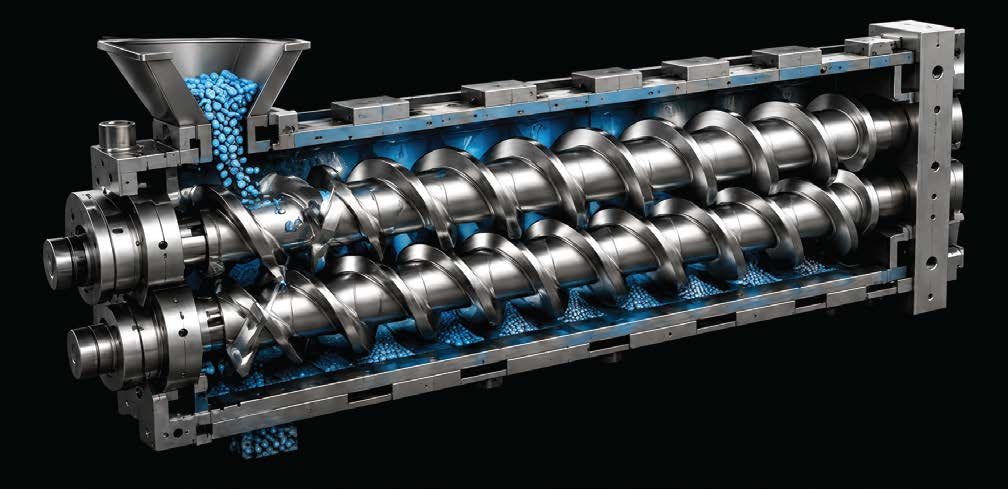
01Co-Rotating Twin Screw
Both screws rotate in the same direction — for high mixing efficiency, self-wiping action, process flexibility, and strong material transfer.
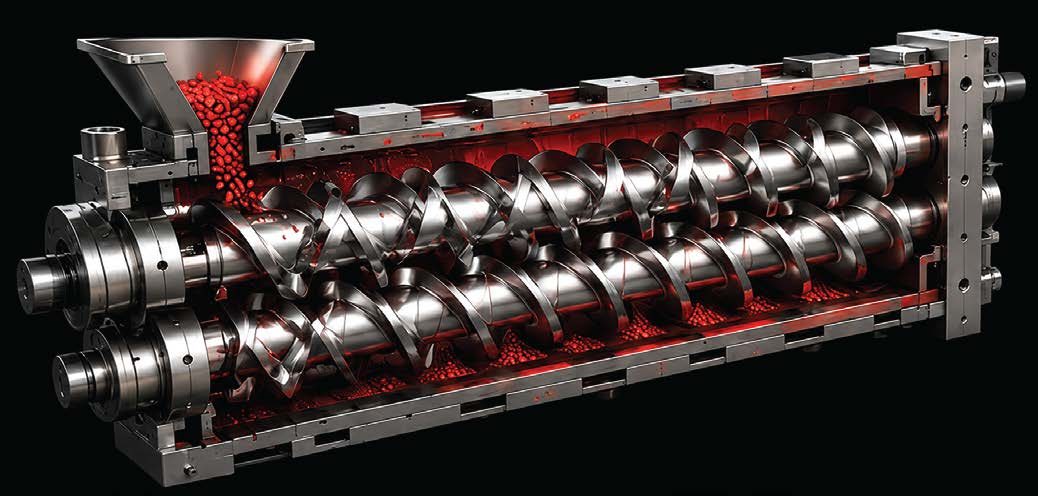
02Counter-Rotating Twin Screw
Screws rotate in opposite directions — generating strong compression, stable conveying, and controlled pressure development.
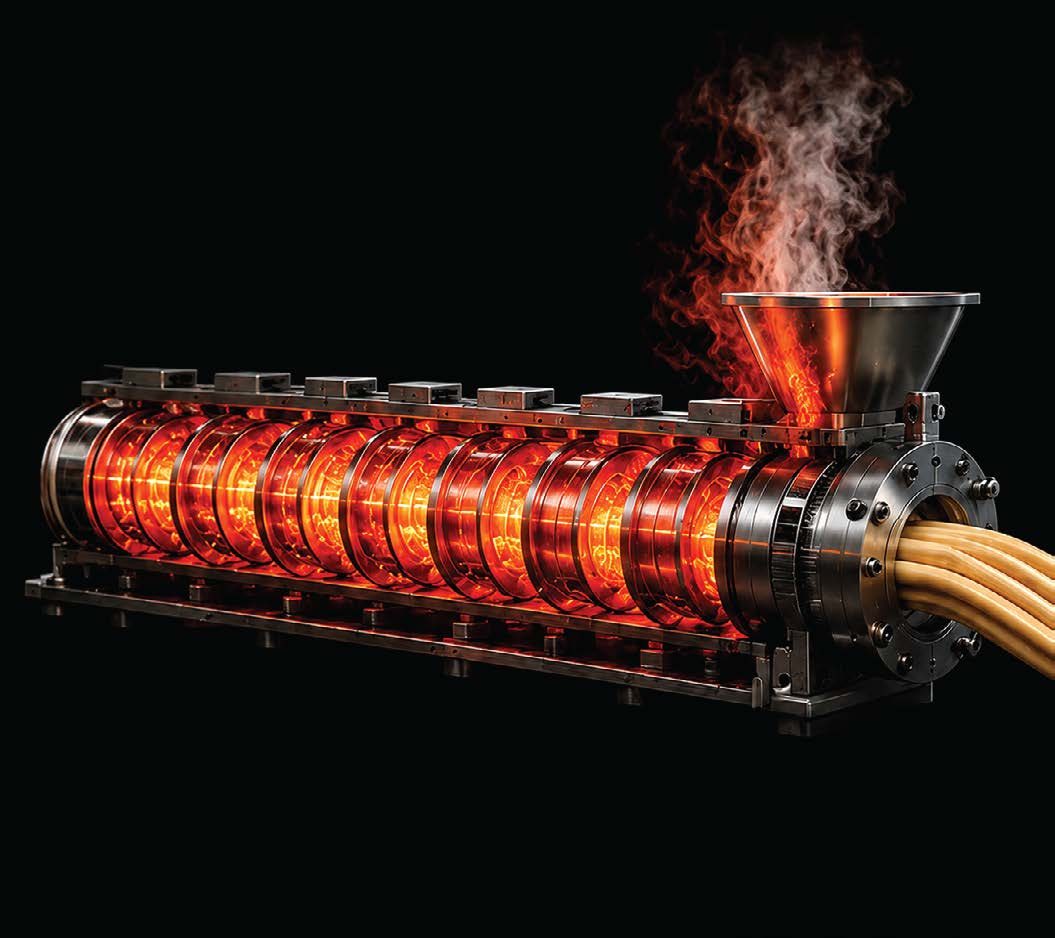
03Hot Extrusion
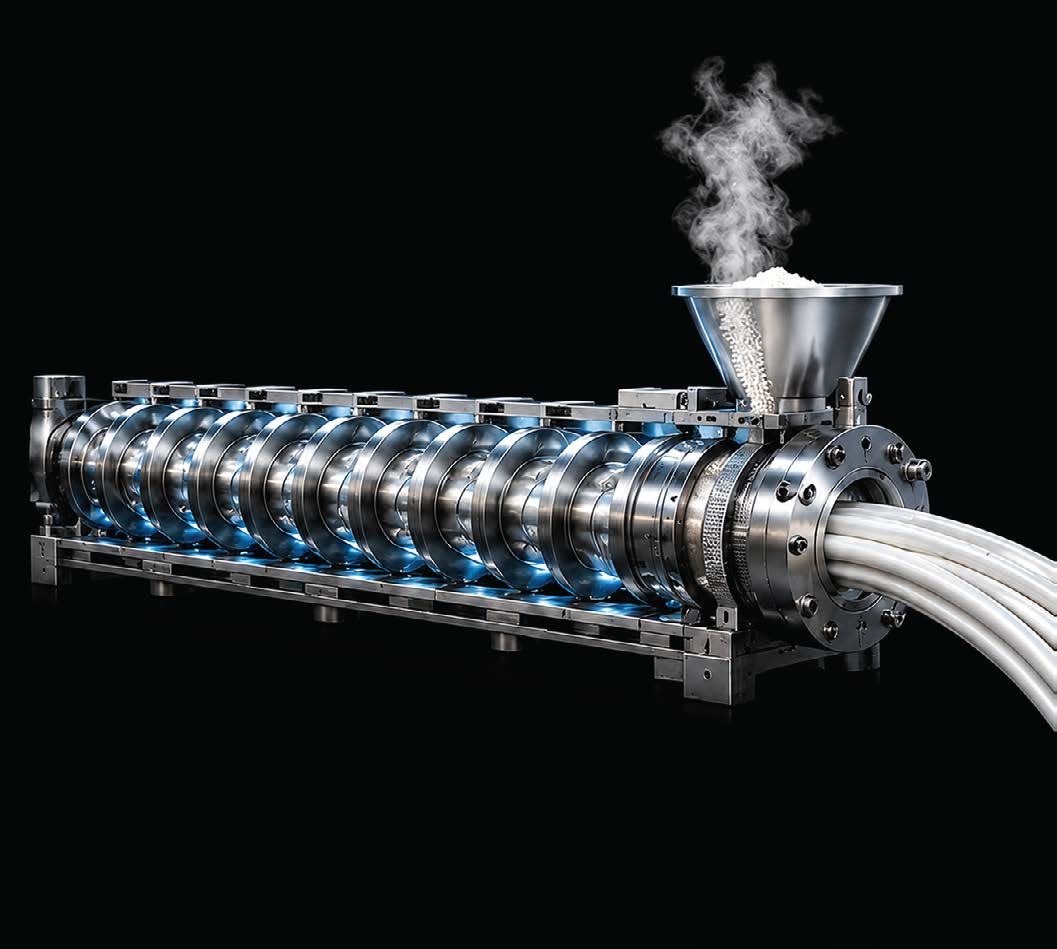
Heat, pressure, and mechanical shear cook, melt, sterilize, and transform materials — the workhorse of food, feed, pet food, aquafeed, snacks, cereals, starches, and polymer processing.
04Cold Extrusion
Forming, shaping, compression, and structuring without significant heat input — for confectionery, doughs, pharmaceutical products, cosmetic materials, ceramic pastes, and battery compounds.
Innovating processes. Enhancing possibilities.

01High-Moisture Extrusion
One of the most important technologies in the future of food — critical for plant-based meat, structured proteins, seafood analogues, hybrid proteins, and high-value nutritional foods.
02Low-Moisture Extrusion
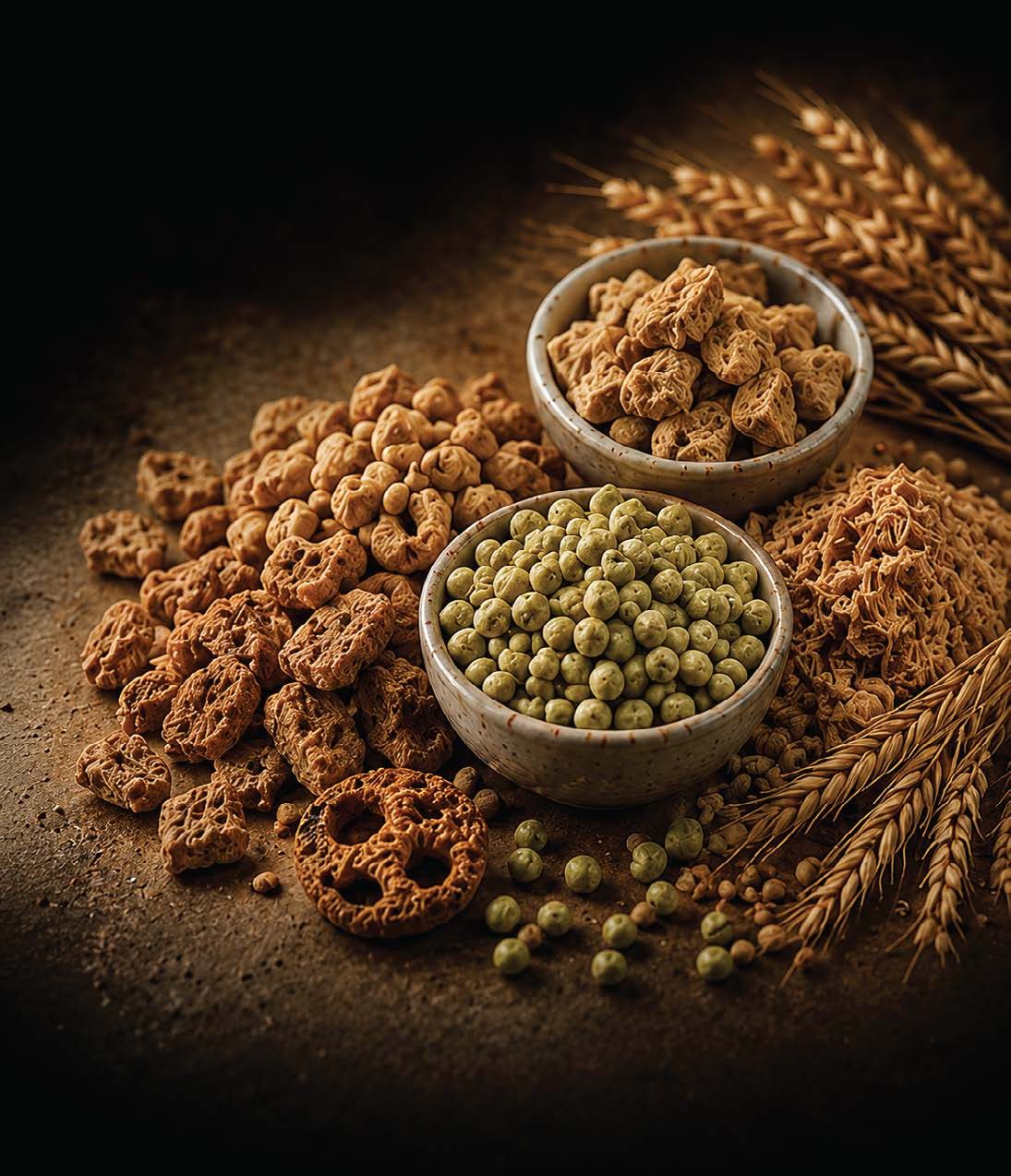
Widely used for expanded snacks, cereals, texturized vegetable protein, pet food, aquafeed, starch products, and dry ingredient structuring.
03Reactive Extrusion
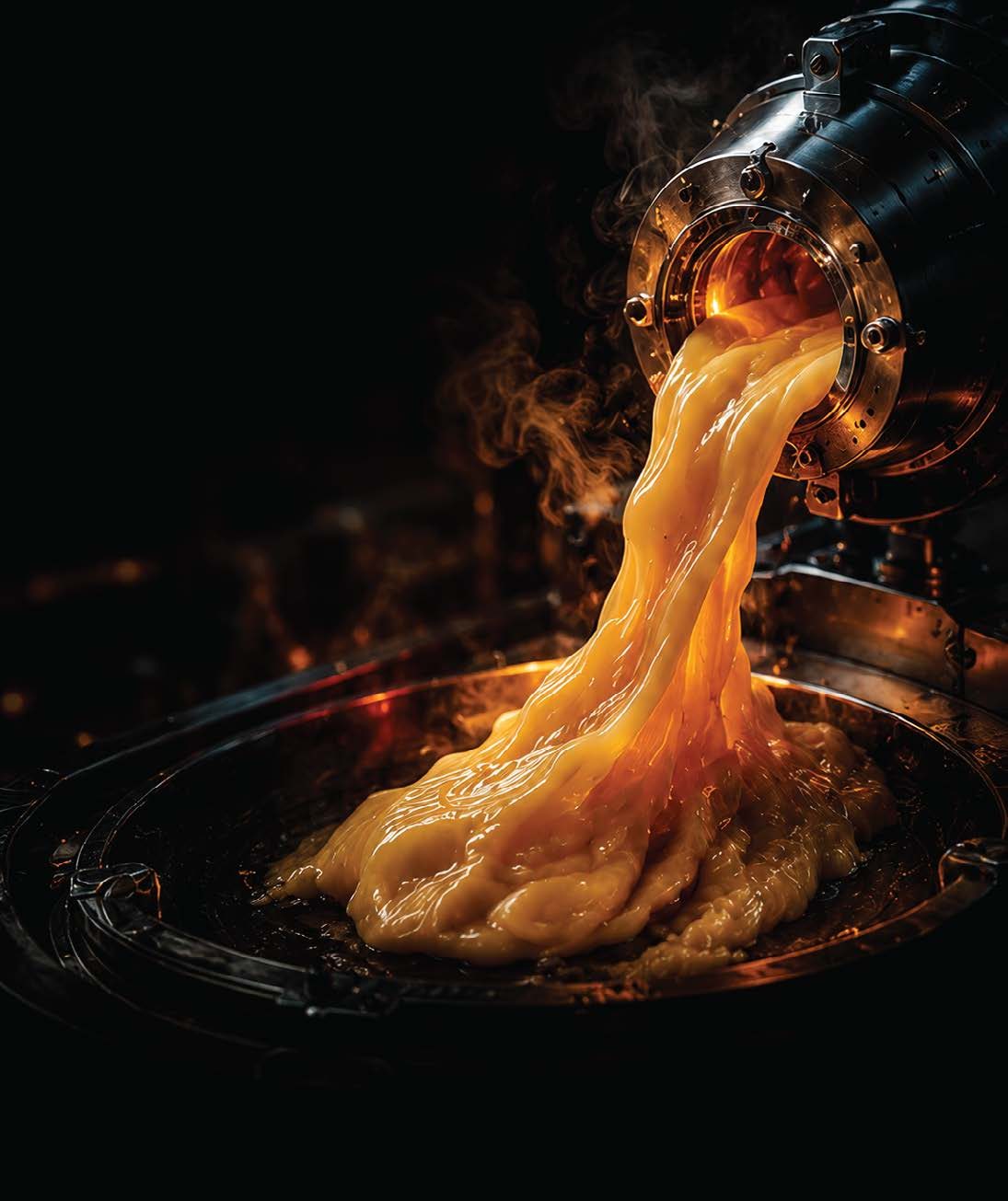
The extruder becomes a continuous chemical reactor — chemical reactions occur under controlled shear, pressure, temperature, and residence time.
04Compounding Extrusion
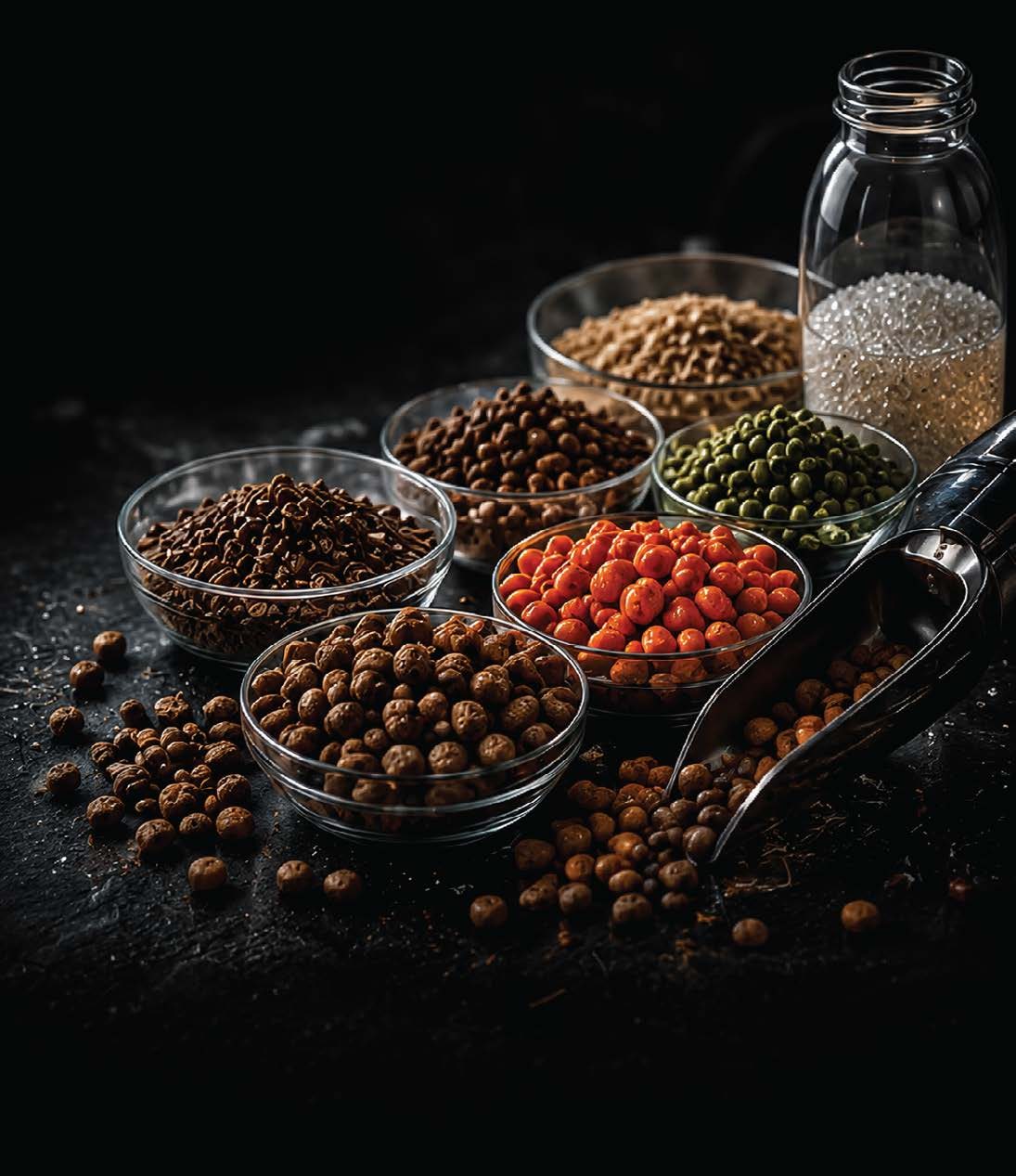
Polymers, fillers, pigments, fibers, additives, stabilizers, plasticizers, flame retardants, and reinforcements blended into a homogeneous material.
Not sure which platform fits your product?
Tell us your material, your product goal, and your target capacity — our process engineers will recommend the right technology.
Talk to a Process Engineer